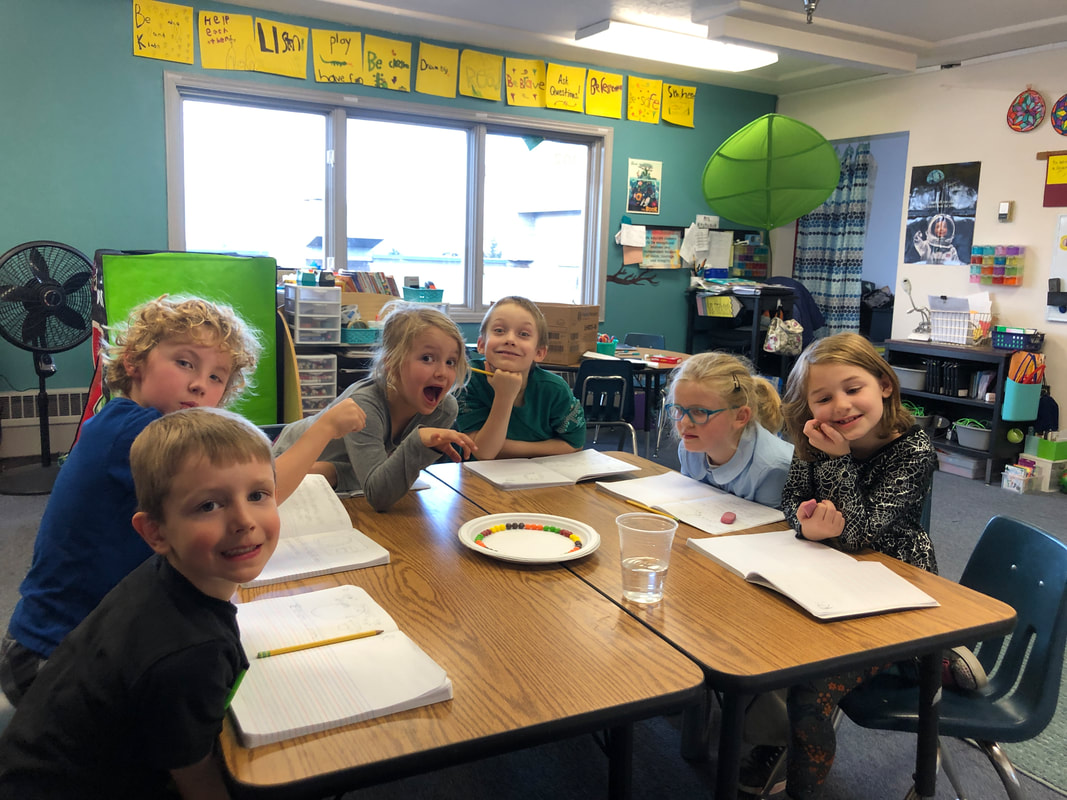
At PNA, we highly value the skills of critical thinking, collaboration, communication and creativity. While called different names over the last few years – 21st century skills, soft skills, etc. – one thing remains constant. These are the skills that employers are seeking out in their future employees.
Woven throughout the day, in and out of the curriculum, we offer students the opportunity to practice these skills in a variety of ways. Our current nonfiction studies are allowing second graders to use their critical thinking, collaboration and creativity, but most importantly allowing them time and space to hone their communication skills.
When you “write like a scientist”, several things need to occur. You must have powerful observation skills in order to notice detail and patterns. You must be able to synthesize information coming from your data sources. You must also be able to write in a simple, yet informative way so that you anticipate the questions your reader will ask about your subject and deliver knowledge to a wide range of readers.
Within our nonfiction unit of study, kids are learning how to
- Write about areas of expertise
- Read mentor texts to study nonfiction writers craft
- Elaborate
- Write for readers, anticipating their questions and hooking their interest
- Experiment with different kinds of nonfiction writing
In the past two weeks, students in second grade have written a biographical speech, and two lab reports detailing the scientific method. They have taken the time to learn how to observe like a scientist and explored ways to document their findings. This week, students will embark on a different type of nonfiction writing in the form of their own infographics as well as each adding a chapter to our class book on bats.