News from the Kindergarten classroom
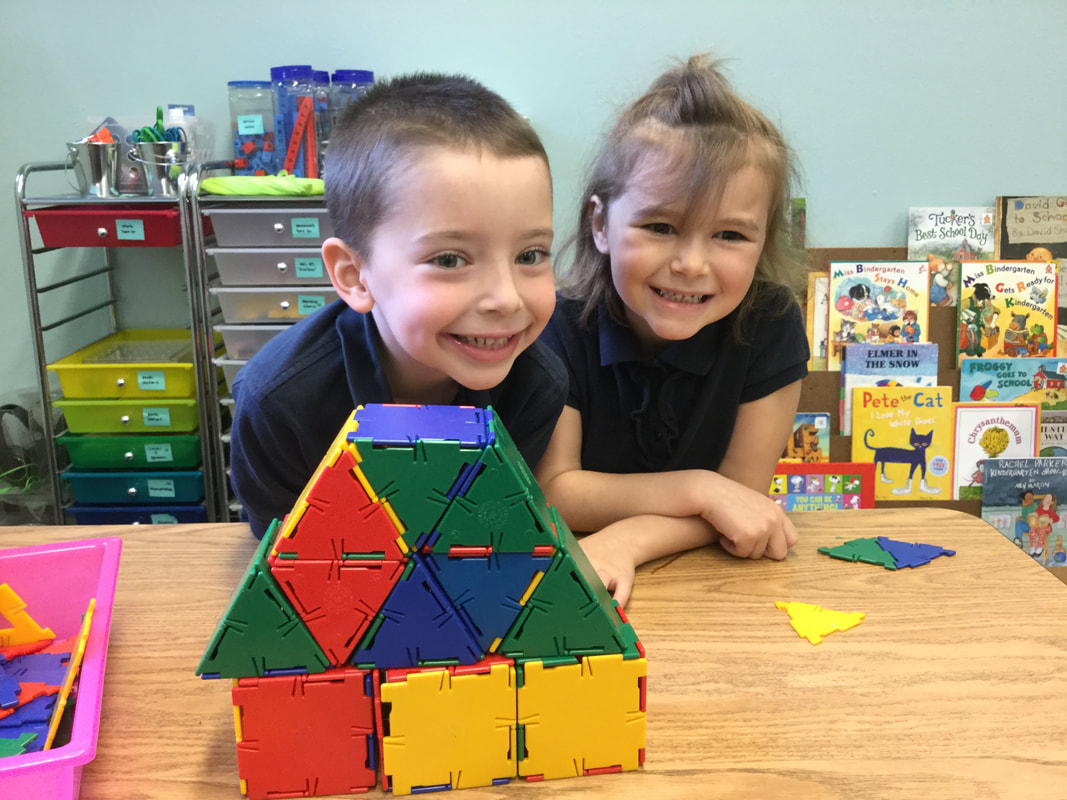
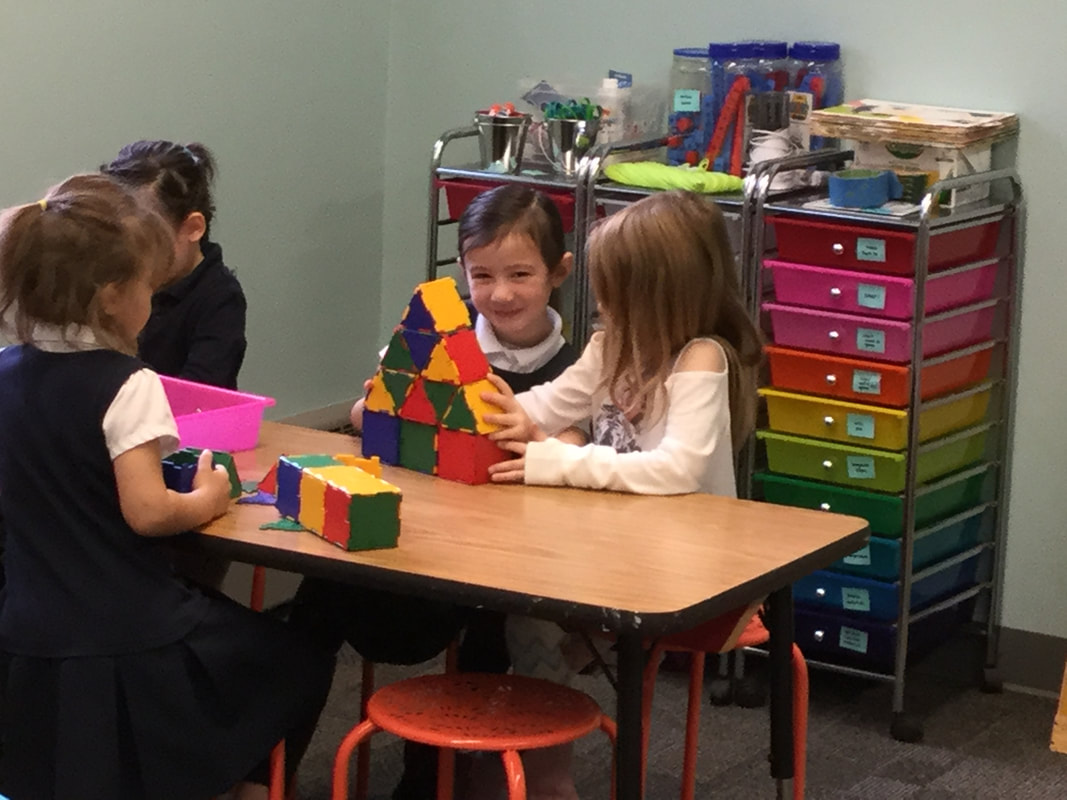
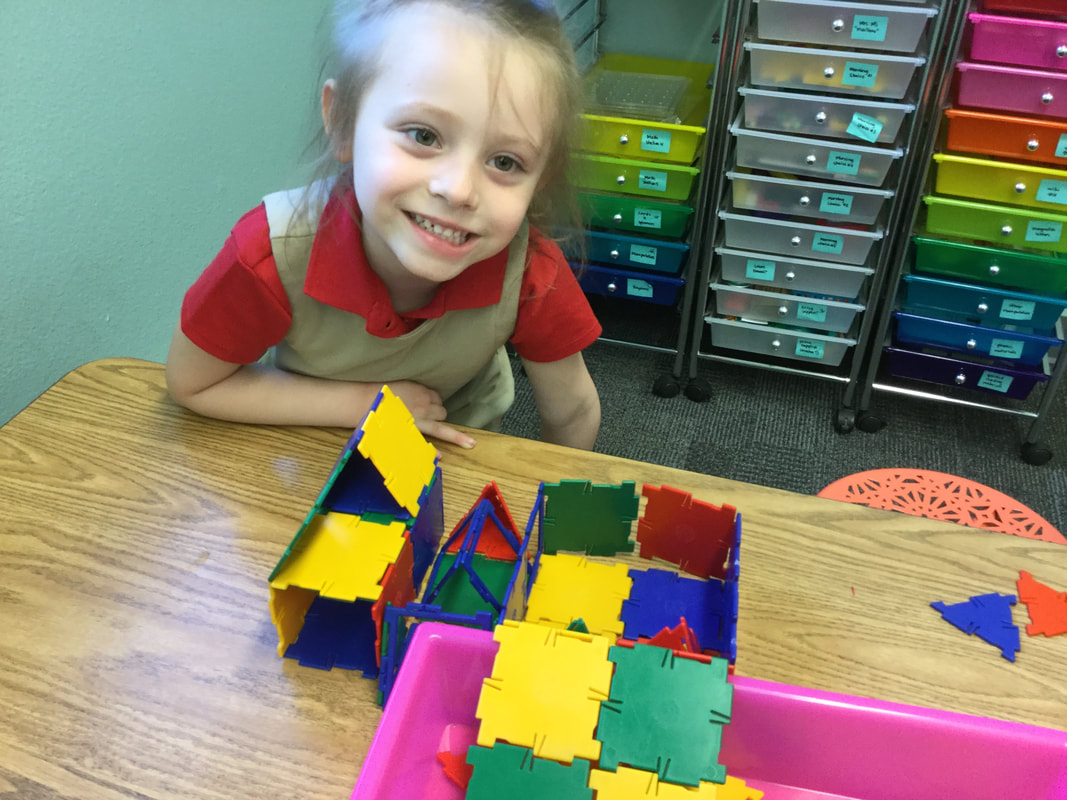
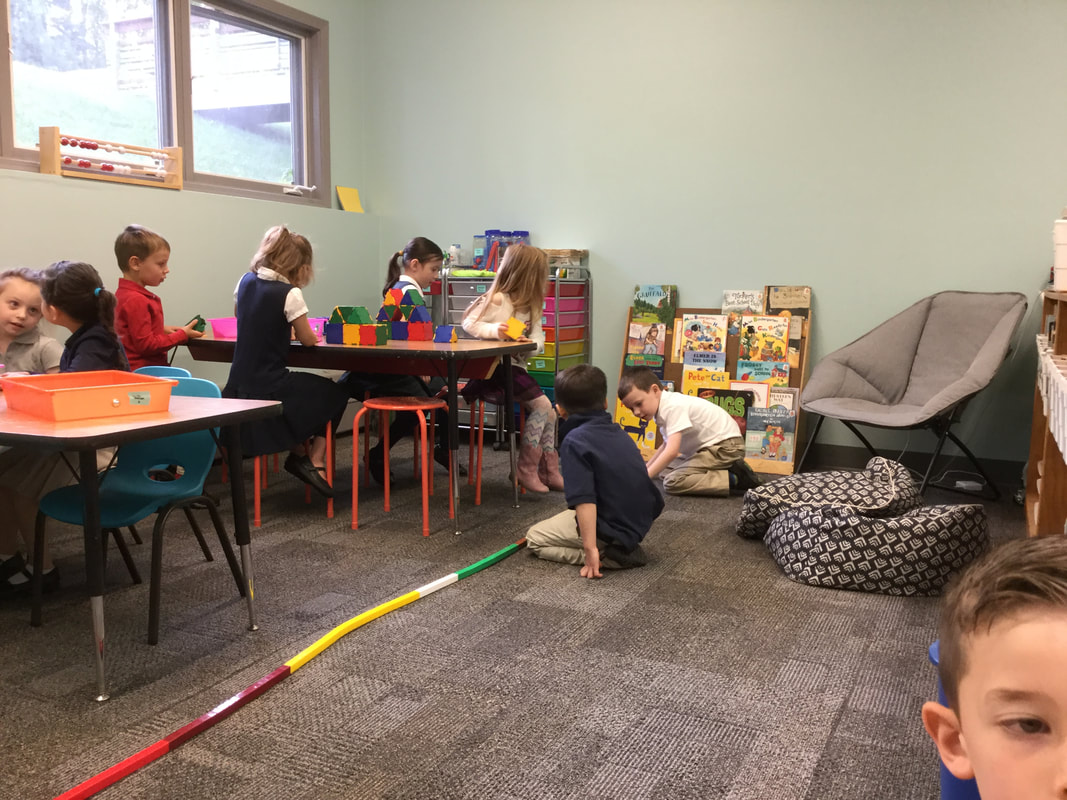
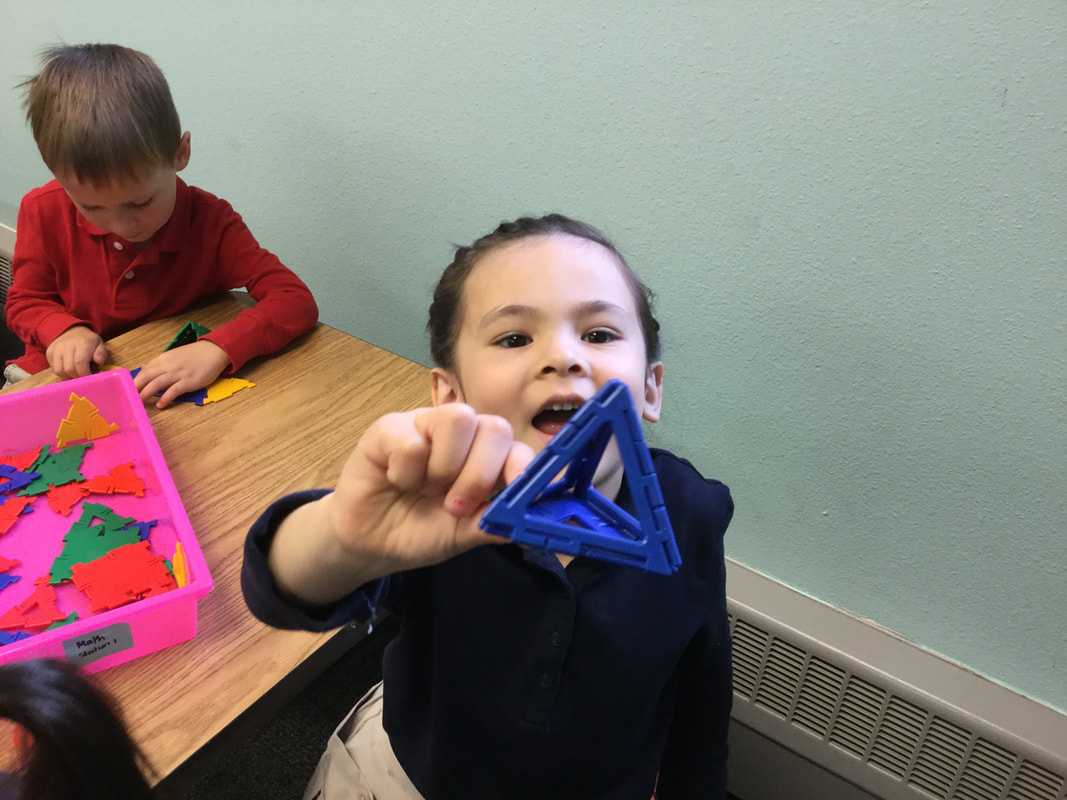
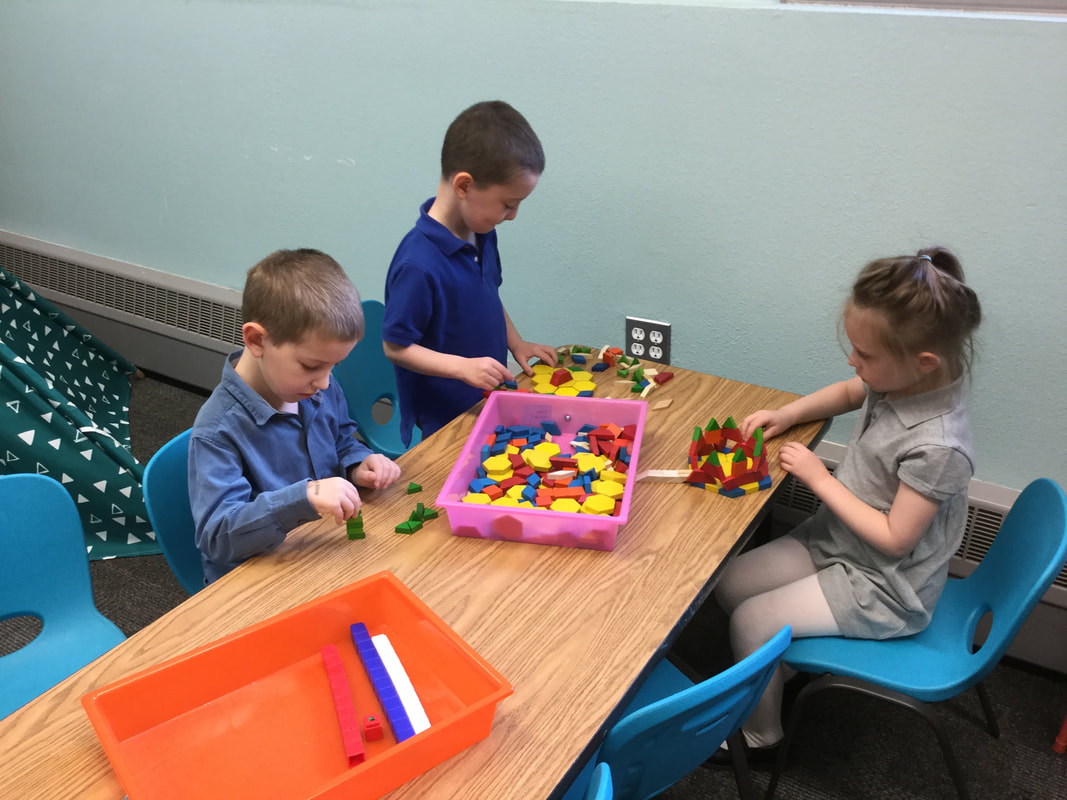
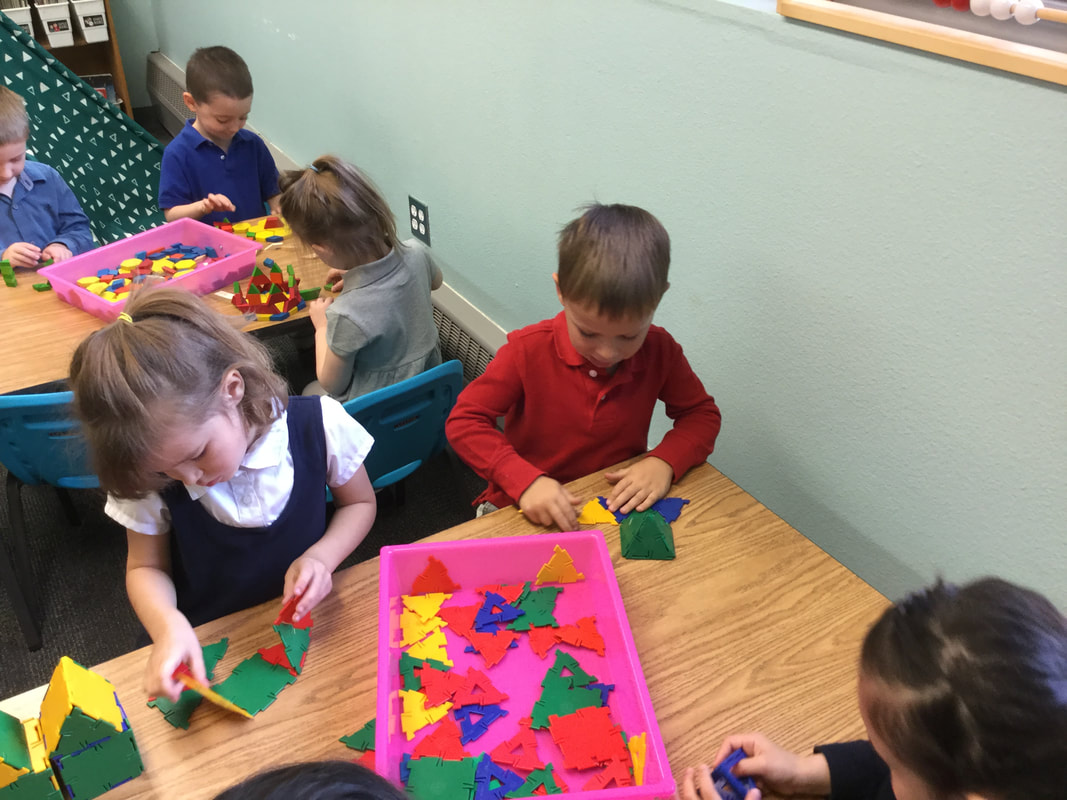
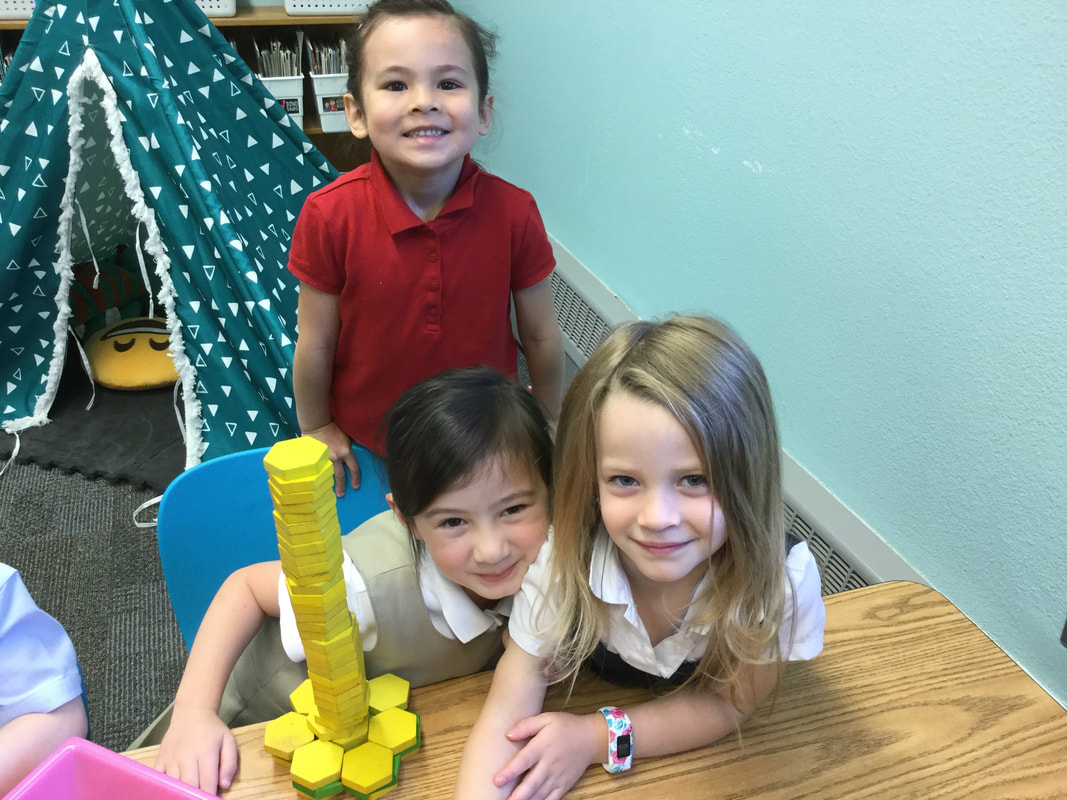
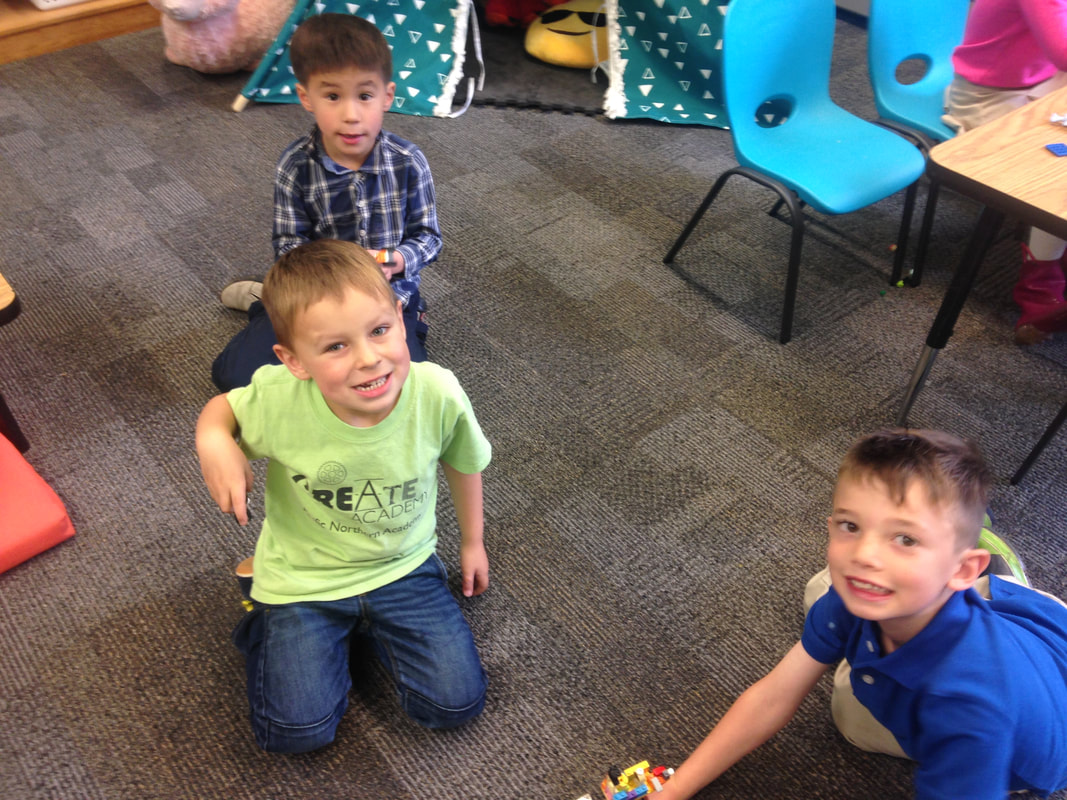
If you walk into our math class, it looks a lot like playing. Throughout the year in kindergarten, the Bridges math curriculum is set up in the workshop model. Students are directly taught a concept during a group lesson and then they spend the majority of their time doing, practicing, engaging with the concept… playing with it. It is developmentally appropriate for their young age and fun for them, but it is also highly effective and engaging. Students are able to continually practice a concept or skill and then expand on it, think about it in a new way, and solve problems in a different way, all while they play and have fun with their classmates.
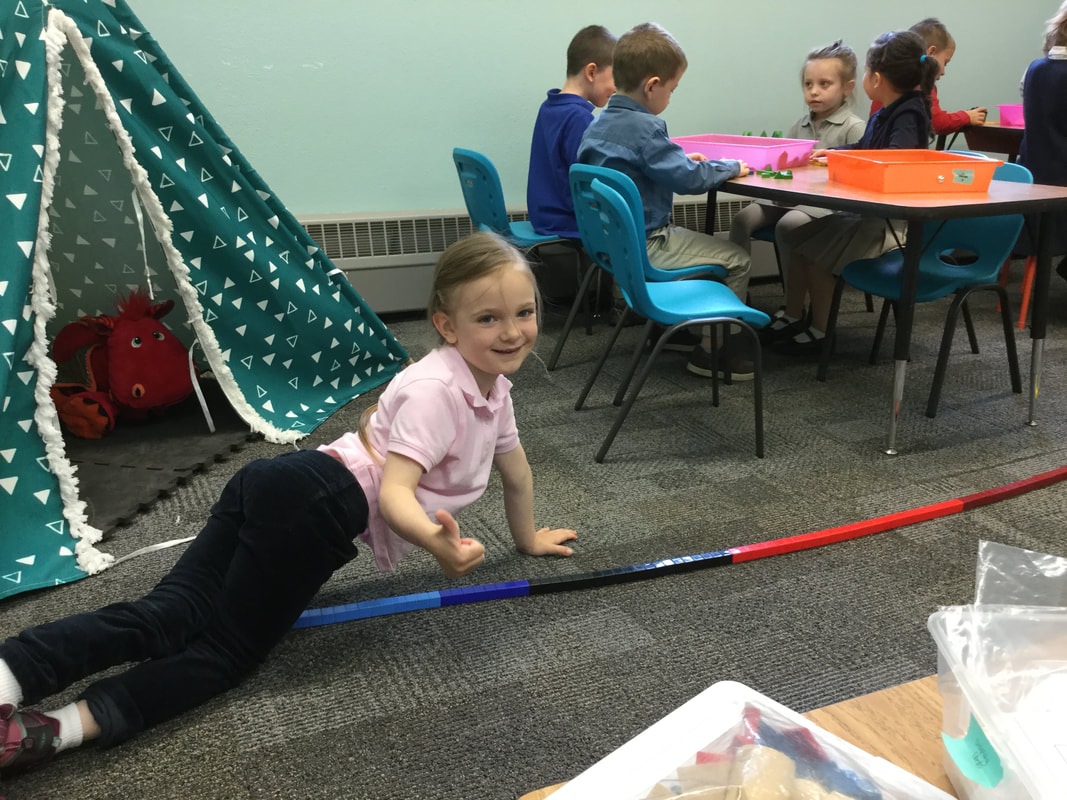
Soon, the play will come in the form of much more structured games and activities, things that will help them practice a specific concept or skill. However, I always love the beginning of the year because it is much more open-ended. In the very beginning, students explore our math tools and the various ways in which they can be used. In short, it is free play. I love it because, as their teacher, it gives me a little glimpse into how they think, how they approach problems (both mathematical and social-emotional), who prefers to work independently and who prefers to work with others, who uses math naturally to explain our world and who needs a nudge to do so. In this way, it gives me so much valuable information about our sweet little ones: their strengths, their areas for growth, and how I can best teach them. It also provides our kindergartners with the opportunity to collaborate with their peers and use their imaginations and creativity as they use our math tools in new and different ways, making up games or small worlds or trying to reach the ceiling with the “longest unifex train ever.”
Lest you think we’re wasting our math time, let me share with you some of the benefits of play. According to Marie Hartwell-Walker, Ed.D. in her article, “The Benefits of Play:”
- Play is needed for healthy brain development.
- Pretend play stimulates children’s imagination and creativity.
- Play develops the brain’s executive function.
- Play helps children develop empathy.
In an article by Kenneth R. Ginsburg, in The American Academy of Pediatrics, he not only notes some of the things above, but explains that play helps develop dexterity, and physical, cognitive, and emotional strength. It “helps children develop new competencies that lead to enhanced confidence and the resiliency they will need to face future challenges. Undirected play allows children to learn how to work in groups, to share, to negotiate, to resolve conflicts, and to learn self-advocacy skills. When play is allowed to be child driven, children practice decision-making skills, move at their own pace, discover their own areas of interest, and ultimately engage fully in the passions they wish to pursue. […] Perhaps above all, play is a simple joy that is a cherished part of childhood.”
Our little ones are capable of so much more than they know, but it is also nice to just let them be little, especially knowing that by doing so, we are in fact helping them grow to reach their full potential.