
Before starting the activity, the Beginners explored 3 different types of laundry detergent- powdered, solid bar soap, and liquid detergent. We discussed the difference between solids and liquids and made guesses as to which kind of soap would make the best bubbles. Many children guessed that the liquid soap would make a lot of bubbles, as they compared it to bubble bath and dish soap.
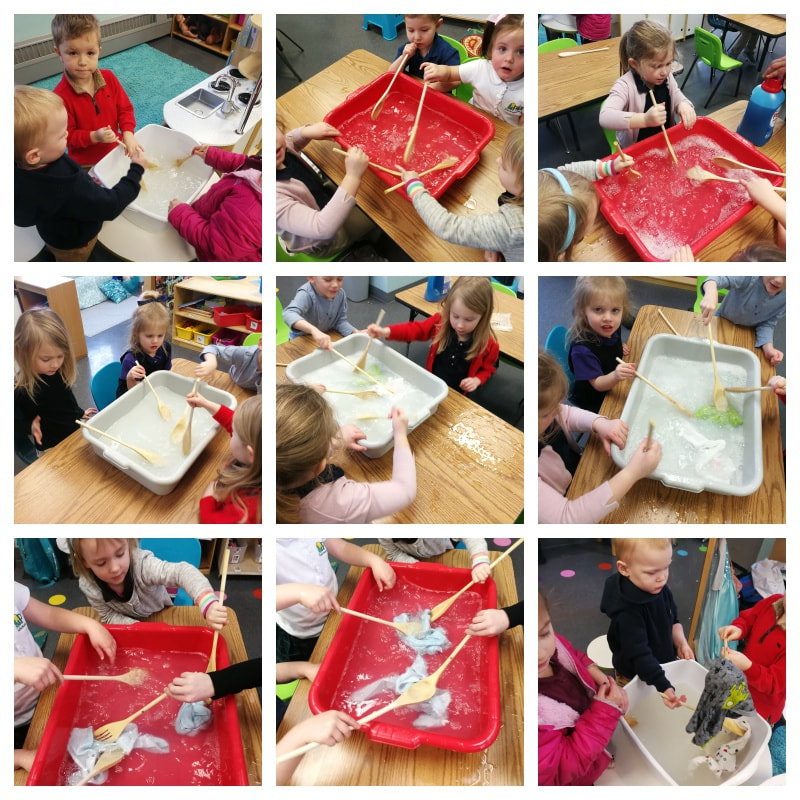
We filled up 3 different buckets with warm water and added grated bar soap to one, liquid soap to another and powdered soap to the last one. The Children were split into groups and given spoons to mix the water and soap mixtures. It took a while to get going, but eventually, the bubbles started forming. After we had some suds worked up, we added some of our doll clothes from the dramatic play center to each bucket to give them a good washing.
After the Beginners had mixed up their clothes, we looked at each of the buckets to see which one had the most bubbles in it. The bucket with the grated bar soap had the most bubbles and the powdered laundry detergent had the least. Surprisingly, though, the powdered laundry detergent had the dirtiest water.
We talked about the results and decided that more bubbles doesn’t necessarily mean it will make things cleaner. We weren;t sure why the bar soap had the most bubbles, but thought it was interesting that the liquid soap didn’t “win” in this experiment.
Critical thinking skills are enhanced during such science activities. Children are able to ask the why, how, and what questions. Even better, they can help answer the questions themselves. They can learn the scientific process along the way!