
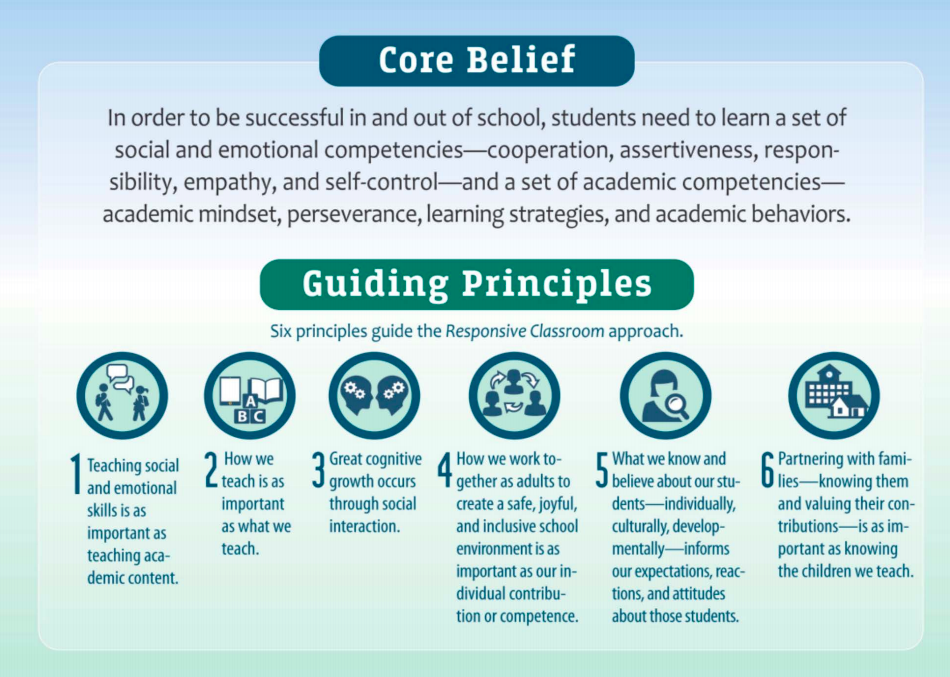
Here are some examples of shared practices used K-8:
- Interactive Modeling—An explicit practice for teaching procedures and routines (such as those for entering and exiting the room) as well as academic and social skills (such as engaging with the text or giving and accepting feedback).
- Logical Consequences—A non-punitive response to misbehavior that allows teachers to set clear limits and students to fix and learn from their mistakes while maintaining their dignity.
- Interactive Learning Structures—Purposeful activities that give students opportunities to engage with content in active (hands-on) and interactive (social) ways.
- Morning Meeting–This is an engaging way to start each day, build a strong sense of community, and set children up for success socially and academically. Each morning, students and teachers gather together in a circle for twenty to thirty minutes and interact with one another during four purposeful components: morning message, greet, share, and group activity.
Responsive Classroom practices ensure we are helping guide our students through a challenging and overwhelming time in their lives. Students are beginning to sort out their own feelings about the world around them—sometimes unsure what they think or where they fit in. This emotional confusion can lead to friendships being tested and boundaries being pushed. In our school bubble, we do our best to talk through our problems and interact with each other respectfully, just as we do in the real world. Our students have already showed immense growth since the beginning of the year, as students and as people. Every lesson they learn and experience they overcome, helps them become better people.
We also use educational practices specifically geared toward Middle School:
- Responsive Advisory Meeting—On Wednesday mornings, we form multi-aged groups and discuss issues that are driven by the kids themselves. The goal is to provide a safe space to build meaningful connections and share what is on our minds. (Thank you to all families who have provided snack for these meetings)
- Investing Students in the Rules—A process facilitated by the teacher that is composed of four steps: setting SMART goals, connecting the goals to rules, connecting the rules to concrete behaviors, and making the rules come alive.
- Active Teaching—A strategy for delivering curriculum content where the teacher presents, explains, illustrates, and demonstrates content in a way that enables students to meet a learning objective. The three phases of active teaching are Teach and Model, Student Collaboration, and Facilitate Reflection.
- Small Group Learning—A structured way for students to work together on a specific learning goal, assignment, or project that is organized by the teacher.
https://www.responsiveclassroom.org/about/principles-practices/