
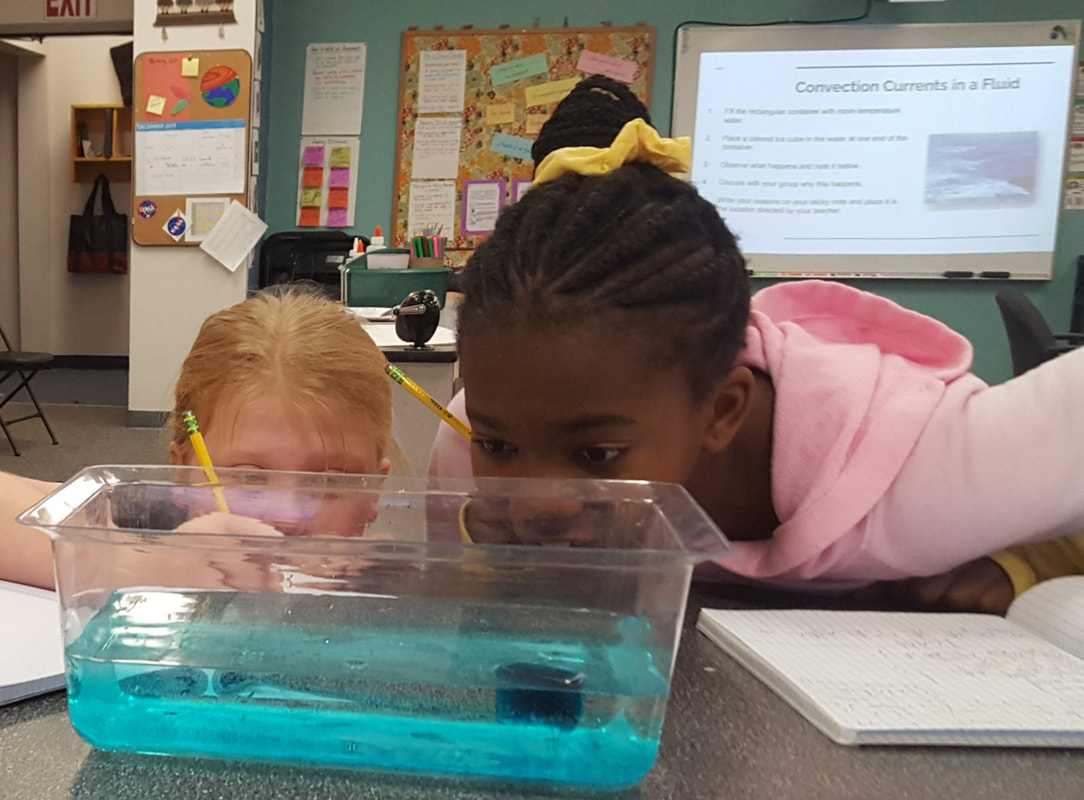
In science this is called the CER (Claim- Evidence- Reasoning); in Social Studies it’s Document Based Questions; in ELA it’s Reading for Information (Essay Response), Informative Writing, and Argument Writing.
Here are some examples of what students have recently been grappling with. In all cases, students must research to back up what they are saying with evidence from the text or data from their own experiment.
- Analyze how human activity has affected marine life.
- Should children participate in competitive sports?
- Write a scientific explanation that describes the effects of the 1997 El Niño on the Galapagos Islands.
- Write a scientific explanation that explains how birds and fish are more similar than they appear to be based on their adult features.
- Write an essay showing the growth of one character in the story you are writing.
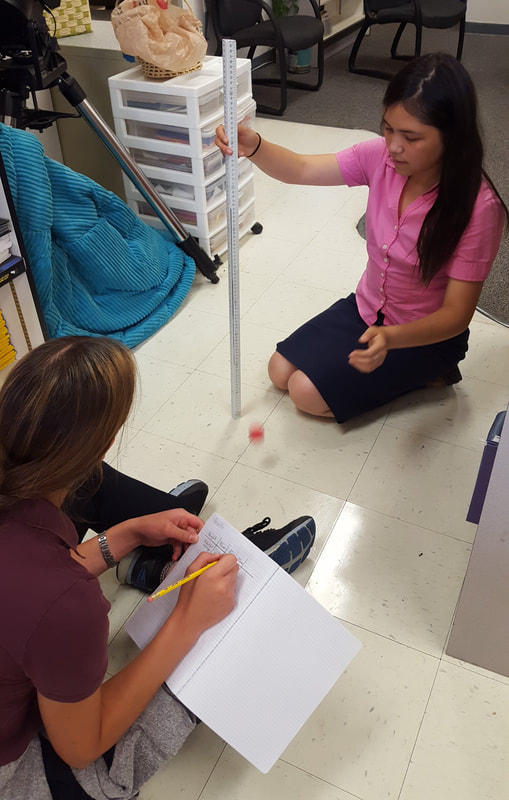
- “Human activity has affected marine life.”
- “Children should not participate in competitive sports.”
- “El Nino caused higher temperatures and more rain in the Galapagos Islands in 1997.”
- “Birds and fish have similar embryonic development – each starting with gill slits.”
- “The main character, Andrea, starts out as quiet and shy, but finds her voice through a number of experiences throughout the book.”
- “So and so stayed up all night last night.”
- “The world is flat.”
Yet, students are learning that these claims can’t just stand on their own and that just because someone makes a claim, they don’t have to believe that person. In most cases, strong claims require solid evidence – proof that supports the claim.
Sometimes, the evidence for a claim can be harder to come up with. It is important for students to know the difference between evidence based on fact – something that cannot be refuted, and be able to prioritize that evidence based on its strength.
With evidence in hand, students can then explain how it supports their claim. In science, this part is called “Reasoning” and it is where the evidence is analyzed and explained in detail. In other formats, the “Reasoning” may occur alongside each bit of evidence, always referring back to the claim.
Regardless of the format, the skillset is the same – make a claim based on evidence, and explain how that evidence supports the claim. This is not easy and yet the students – while they groan – take it on across subjects and practice weekly.
So, sharpen up your own skills of debate and argument. You may need them for this prepared batch of Middle Schoolers!